
What players say
Number Battle succeeds where many educational games fall short: it makes practice genuinely enjoyable. The head-to-head format motivates children to think faster and more accurately, turning what could be tedious repetition into a lively contest. The three difficulty levels ensure that both beginners and advanced students stay challenged without feeling overwhelmed. Keyboard controls are intuitive, and the lack of distracting animations keeps focus on the math. While it lacks single-player or online modes, its simplicity is a strength for classroom or home use.
About this game
Competitive Math Format
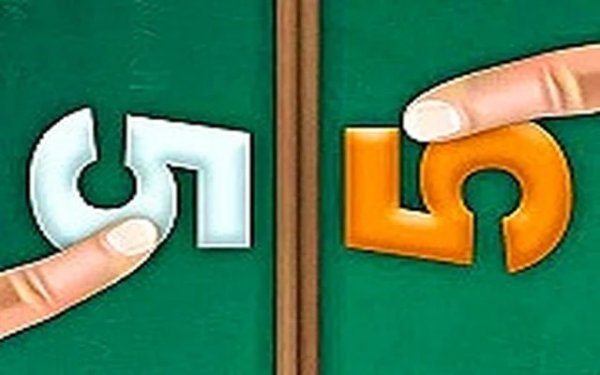
Number Battle reimagines arithmetic practice by putting two players against each other in a timed challenge. Each participant sees the same math problem and must type their answer as quickly as possible. The player who responds first with the correct solution earns a point. This setup transforms solitary study into a social activity that encourages repeated practice without feeling repetitive.
Core Operations Covered
The game includes four fundamental areas of arithmetic: addition, subtraction, multiplication, and division. Players can choose to focus on one operation at a time or cycle through all four for a comprehensive workout. This structure allows children to strengthen specific skills before moving on to mixed problem sets, which better reflects real-world math use.
Difficulty Progression
Three difficulty settings let players start at a comfortable level and advance as their abilities improve. The easiest setting uses small numbers and simple combinations, making it ideal for early learners. The hardest setting introduces larger values and more complex calculations, challenging even experienced students. This gradual ramp helps maintain motivation and prevents frustration.
Keyboard-Based Controls
Each player uses a separate set of keys on the same keyboard, with Player 1 controlling the left side and Player 2 the right side. This setup requires no additional hardware and works on any standard computer. The controls are simple enough for young children to learn quickly, while the competitive element keeps them engaged for longer sessions.
Learning Through Friendly Rivalry
The head-to-head format naturally encourages children to improve their response times and accuracy. Over multiple rounds, players learn to think under pressure and recover from mistakes quickly. Parents and teachers can use the game as a tool to identify which operations a child finds most difficult, then adjust practice accordingly.



Player comments
Sign in to comment
You must be logged in before posting a review or rating.
No account? Create one
No comments yet. Be the first to comment!